Introduction
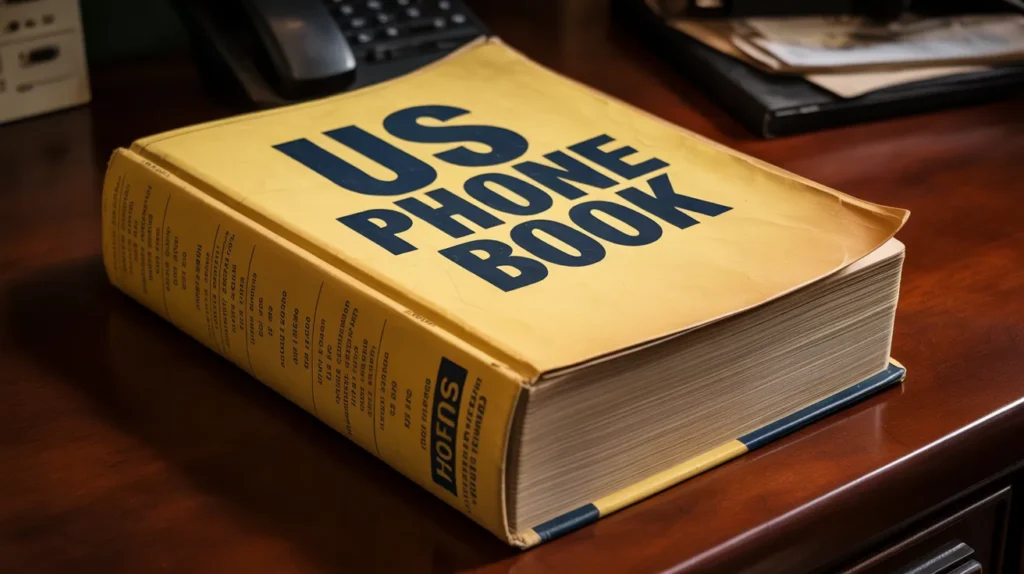
Remember those chunky books they dumped on your doorstep every year? The US phone book felt heavy, smelled like newsprint, and took up half your hall closet. Nobody asked for them. They just appeared, like dandelions in April. You probably used one as a doorstop or booster seat at the dinner table.
But here’s the thing. That clunky United States phone directory held serious power. Every name. Every address. Every landline. Your whole town, trapped between cardboard covers.
Today? We tossed the paper. But we kept the power. The online US phone book does things that the old book never could. It finds cell numbers. It traces spam calls. It connects you with old friends. And yeah, sometimes it helps you figure out who kept calling and hanging up at 2 AM .
I use these tools constantly. Found a roofer through a free US phone book last month who actually showed up on time. Tracked down my third-grade best friend using a US phone lookup that cost me zero dollars. The old paper book could never.
This guide walks you through everything. How to search. Where to look. What’s free and what’s a trap? Let’s dig in.
| Category | Specific Information | Key Details & Historical Data |
|---|---|---|
| 📅 Genesis & First Edition | The world’s first phone book was issued in New Haven, Connecticut, USA. | Issued on February 21, 1878. It was a single cardboard sheet listing 50 individuals/businesses. No phone numbers were listed; you asked the operator for the person by name [citation:1][citation:6]. |
| 🎨 Color-Coded System | White Pages, Yellow Pages, Grey Pages, and Blue Pages. | White Pages: Residential/alphabetic listings. Yellow Pages: Business/classified (first appeared 1886, Chicago). Grey Pages: Reverse lookup (by number). Blue Pages: US government/agency listings [citation:1][citation:4][citation:9]. |
| 🔢 Invention of Phone Numbers | Dr. Moses Greeley Parker suggested numbering telephones in 1879. | He feared Lowell, Massachusetts’ four operators would all get measles; numbers would allow substitutes to connect calls without knowing every subscriber by name [citation:1][citation:4]. |
| 📞 Listing Options (Traditional) | Multiple privacy/listing choices regulated by phone companies. | Directory Listing: Free (in book + 411). Non-Published Number: ~28¢/month (not in book, not in 411). Directory Assistance Listing: ~14¢/month (in 411 only) [citation:7]. |
| 🔄 Reverse (Criss-Cross) Directories | Organized by phone number or street address, not by name. | Used by businesses, police, and genealogists. Library of Congress holds extensive collections on “Deck 46”. Allows finding a name if you only have an address or number [citation:5][citation:10]. |
| 🌍 Environmental Footprint (2010) | Paper & greenhouse gas data from production. | In 2010, US phone book production consumed over 600,000 tons of paper and generated 1.4 million metric tons of greenhouse gases annually [citation:1][citation:4]. |
| ⚖️ Supreme Court Ruling (1991) | Feist Publications, Inc., v. Rural Telephone Service Co. | Ruled that white pages listings are not copyrightable. Copyright protects creativity, not the “sweat of the brow” labor of collecting facts [citation:1][citation:6]. |
| 📱 Cell Phones & Directories | Mobile and VoIP numbers are generally NOT in traditional directories. | US regulations/practices exclude cell numbers. Efforts to create a cellular directory faced opposition due to privacy and telemarketing fears [citation:1][citation:4]. |
| 💿 CD-ROM Directories (1990s) | SelectPhone (ProCD) and PhoneDisc. | Mid-90s, you needed up to 8 CD-ROMs to cover the whole US. They offered reverse lookup features but required swapping disks. Accuracy was ~85-90% [citation:1][citation:8]. |
| 🌐 First Online US Directories | Yellowpages.com & Whitepages.com launched April 1996. | These were the first movers. Prior to that, France had Minitel (1981). By late 90s, Switchboard, AnyWho, and others emerged [citation:1][citation:4][citation:8]. |
| 🚫 City Bans & Legal Fights | Seattle and San Francisco tried to ban unsolicited phone books. | In 2012, an industry group sued, and courts ruled distribution could continue, though environmental criticism persisted [citation:1][citation:6]. |
| 🏛️ Library of Congress Collection | Extensive physical archive on “Deck 46” (Main Reading Room). | Organized by state and city. Includes current and reverse directories. Uses color-coded card catalog: Blue (US Tel), Pink (City), Green (Reverse) [citation:5]. |
| 👪 Genealogical Value | Track residency, movements, occupations, family clusters. | Pre-Internet directories fill gaps between censuses. Can reveal “extended family clusters” at same address. Business directories show family-run shops [citation:10]. |
| 💪 Guinness World Records | Ripping phone books in half. | Male record (2006): Edward Charon, 56 books in 3 minutes. Female record (2007): Tina Shelton, 21 books in 3 minutes. They are married [citation:6]. |
| 👆 “Let Your Fingers Do the Walking” | Iconic Yellow Pages slogan. | Introduced in the 1960s. Encouraged users to search the directory instead of driving around to find businesses. Became part of American pop culture [citation:1][citation:9]. |
| 🔎 Modern Online US Phone Books | Free and paid databases. | Sites like usphonebook.com, Whitepages.com, AnyWho. Often include criminal checks, background data. Free basic info; advanced reports require subscription [citation:3]. |
| 📉 Decline of Paper Directories | Regulators stopped requiring residential print listings starting 2010 (NY). | Yellow pages survive due to advertising revenue and older demographics. Many see them as nostalgic collectibles now [citation:4][citation:9]. |
What Actually Happened to the Paper Phone Book?
The paper US telephone directory didn’t just vanish. It evolved.
Back in 1880, the first yellow pages showed up in North America . Think about that. People in bonnets were flipping through directories to find the local blacksmith. The format stuck for over a century. You got two books: white pages for people, yellow pages for businesses.
Then the internet showed up and laughed at paper.
But here’s what most people miss. The data didn’t disappear. It just moved somewhere better. Today’s phone number search US tools tap into databases with hundreds of millions of records. We’re talking about information from phone companies, public records, utility bills, and even opt-in marketing lists .
One service called USPhoneBook connects to over two billion records . Two. Billion. That’s like every phone book in America stacked to the moon and back.
The paper book covered your town. Online directories cover everywhere.
Reverse Phone Lookup: The Party Trick That Actually Works
Let me tell you about Tuesday night. My phone buzzes. Unknown number. I ignore it. Buzz again. Same number. I ignore harder. Buzz a third time.
Now I’m annoyed. Who calls three times and doesn’t leave a message?
I pull up a reverse phone lookup US tool. Type in the ten digits. Hit search. Three seconds later, I know it’s a local plumbing company confirming an appointment I totally forgot about. Crisis averted. No awkward “who dis” text needed .
That’s the magic of reverse lookup. You have the number. You want the name. The internet does the rest.
Most free tools show you the basics: owner name, general location, phone type (landline, cell, or VoIP), and sometimes spam reports . If the number’s been reported as a scammer by fifty other people, you’ll know before you answer.
Some services go deeper. Paid versions pull criminal records, property history, relatives, and even social media links . That’s how you screen a potential babysitter or check if your daughter’s new boyfriend actually lives where he claims.
Quick tip: Always try the free US phone book online tools first. Whitepages, AnyWho, and 411.com all offer basic searches without charging you . Save the paid stuff for when you need the deep dirt.
Finding People When You Only Have a Name
Sometimes you flip it around. You have the name but lost the number. Maybe it’s an old army buddy. Maybe it’s that guy who promised to pay you back for concert tickets in 2019.
You need to find phone numbers in the US starting with just a name. Harder than reverse lookup. But totally doable.
Start with the big players. Whitepages and Spokeo let you search US phone number by name across massive datasets . Type in “John Smith” and prepare to scroll through two hundred results. Add a city or state to narrow things down.
Here’s a pro move: combine searches. Find the person’s address first using a people search engine. Then cross-reference that address with property records. Then search for phone numbers linked to that property. Stacking data sources gives you way better odds than relying on one directory .
The US residential phone numbers game changed when everyone dumped landlines for cell phones. Cell numbers aren’t published like old home phones. But they show up in other places. Data breaches. Shopping rewards programs. Social media accounts. Once that number exists somewhere online, directories can find it .
Business Listings: The Yellow Pages Never Died
My AC died last July. Atlanta heat. Ninety-eight degrees. Sweat dripping down my walls.
I needed a repair person fast. The old US yellow pages directory would’ve taken forever. Flipping pages. Squinting at tiny ads. Hoping the number still worked.
Instead, I pulled up Data Axle Reference Solutions through my library’s website . This thing compiles info from over five thousand yellow page directories, business white pages, corporate reports, and chamber of commerce listings . I searched by zip code, filtered by emergency services, and had three companies on the phone within ten minutes.
Business directories today give you way more than just phone numbers. You get employee counts, sales volume, executive names, and sometimes financial data . That’s gold if you’re job hunting or pitching clients.
The US business phone directory space has tools for every budget. Free options like Google Maps and Yelp work fine for basic searches. Paid services like ReferenceUSA or Gale Directory Library offer the heavy artillery .
Mobile Apps: Phone Books in Your Pocket
Carrying a paper phone book in 2026 would get you strange looks. Carrying a phone book app? Totally normal.
The US cell phone directory lives in app stores now. rLookup pulls caller ID info for any US or Canadian number using data from carriers like AT&T, Verizon, T-Mobile, and Cricket . It even works on some VoIP numbers, which regular directories miss.
Truecaller remains the heavyweight champion for international searches. It covers the US well and adds spam blocking features that actually learn from millions of users . When a scammer calls, Truecaller often flags them before you even glance at the screen.
For area code nerds, there’s an app called Area Code Directory that covers the US, Canada, the Caribbean, and toll-free numbers . Type in 212 and learn it’s Manhattan. Type in 808 and get Hawaii. Simple. Clean. No bloatware.
The Melissa FONE*Data database updates every single quarter with new area codes and prefixes . In early 2026 alone, they added over 800 new records . Phone numbers multiply like rabbits. Apps help you keep up.
White Pages Online: The Free Goldmine
Let’s talk free stuff because who doesn’t love free stuff?
The US white pages online landscape offers plenty of zero-cost options. Whitepages.com lets you search basic info without pulling out your credit card . You’ll see the owner’s name, current address, and sometimes previous addresses. That’s often enough to confirm you’ve got the right person.
Any Who’s been around forever and still delivers solid results. 411.com pulls from the same White pages data but presents it differently . Try both. Sometimes one catches details that the other misses.
Here’s the catch with free tools. They want you to upgrade. You’ll search a number, see a partial result, and get hit with a “subscribe to see full report” screen. Annoying but fair. Those companies pay for data access and server upkeep .
The free US phone book experience works best when you manage expectations. You’ll get the basics. Names, locations, phone types. If you need criminal records or a deep background, budget twenty or thirty bucks for a one-time report .
Area Codes: The Secret Language of Phone Numbers
Every phone number tells a story. The first three digits? That’s the area code. And area codes reveal where a number started its life.
A USA area code lookup transforms random digits into geography. 310 screams Los Angeles. 305 whispers Miami. 212 flexes New York City old money. 718? Brooklyn or Queens, depending on who you ask.
New area codes pop up constantly as old ones run out of combinations. Recent additions include 457 in Louisiana, 729 in Tennessee, and 748 in Colorado . California grabbed 357 and 837 . Texas picked up 621 . The phone companies keep feeding the beast.
Knowing area codes helps with spam detection. Get a call from your own area code? Could be legit. Get a call from a random code in North Dakota when you’ve never set foot in North Dakota? Probably a robocaller spoofing numbers.
Some apps and websites offer reverse area code search. Punch in the three digits and learn the region, time zone, and major cities covered. Great for screening calls without answering .
Privacy: Who’s Looking You Up?
Here’s the part nobody talks about. While you’re searching for other people, other people are searching for you.
Every US phonebook online free site lets users find your info. That ex you’d rather forget? They can type your name and see your current city. That weird guy from the coffee shop? He can look up your number if you wrote it on a napkin.
You have options. Most directories offer opt-out pages where you can request removal. Whitepages, Spokeo, and Intelius all let you suppress your listings . The process takes five minutes per site. Do it for yourself. Do it for your kids. Do it for that friend who still uses a landline and doesn’t understand why strangers keep calling.
Data brokers make this trickier. They buy and sell information constantly. Opting out of one directory doesn’t stop another from picking up the same data from a different source . Consider it an ongoing battle, not a one-time fix.
The trade-off feels weird. You want to find people. You don’t want to be found. Welcome to the internet.
How to Look Like a Pro: Stack Your Searches
Want results that actually work? Don’t rely on one tool. Stack them.
Start with a free US phone lookup on Whitepages or AnyWho. Grab whatever basic info appears. Then take that name and run it through Spokeo or BeenVerified . Then search social media manually. Facebook’s phone number search sometimes connects profiles even when directories miss them . Save the number in your phone and check WhatsApp or Telegram for profile pictures .
Carrier lookup tools reveal whether a number belongs to a mobile carrier, landline provider, or VoIP service . That helps identify burner phones or Google Voice numbers people use to hide.
For serious investigations, combine OSINT tools like PhoneInfoga with data breach searches on HaveIBeenPwned . This shows if a number appears in leaked databases. Not for casual curiosity. But useful if you’re dealing with potential fraud.
The best strategy? Start free. Go paid only when free hits a wall. And never pay before checking if your local library offers free access to premium directories .
The Future of Phone Books
What comes next? Phone books won’t disappear. They’ll just keep mutating.
AI already helps directories verify and clean data. Machine learning spots patterns in spam reporting and flags suspicious numbers faster than humans ever could . Real-time caller ID apps now identify thousands of numbers per second across multiple carriers.
The US telephone directory of 2030 probably won’t look like a website. It’ll live in your phone’s operating system. Every incoming call gets screened against global databases before you even hear the ring. Spam never reaches you. Unknown numbers carry risk scores. Robocallers cry themselves to sleep.
Until then, we’ve got the current tools. Use them. They’re free. They’re fast. They’re way better than that doorstop in your hall closet.
Conclusion
The US phone book survived. It just swapped paper for pixels.
Whether you’re doing a reverse phone lookup in the US to identify a mystery caller or searching the US yellow pages directory to find a 24-hour plumber, the tools exist. They’re accessible. Many cost nothing. Some dig deeper for a few bucks.
Start with the free options. Whitepages, AnyWho, and 411.com cover most everyday needs . When those fail, graduate to paid services or library databases . Stack your searches. Verify across multiple sources. And remember to opt out of directories if privacy matters more than discoverability.
That unknown number buzzing your phone at dinner? Look it up. Could be a scammer. Could be your new job calling. Could be that plumber saving you from a flooded basement.
Only one way to find out.
Frequently Asked Questions
Is there really a free US phone book that works?
Yes. Sites like Whitepages, AnyWho, and 411.com offer free basic searches . You’ll see the owner’s name, general location, and phone type. Detailed background reports usually cost money, but the basics help identify most callers.
Can I find cell phone numbers in a US telephone directory?
Sometimes. Cell numbers don’t appear in traditional directories as landlines do. But data brokers collect cell info from surveys, warranty cards, rewards programs, and data breaches . Some directories include these numbers in their databases. Success rates vary.
How do I remove my information from online phone books?
Visit each directory’s website and look for “opt out” or “privacy” links. Whitepages, Spokeo, and Intelius all offer removal forms . The process takes a few minutes per site. Expect to verify your identity via email or phone.
What’s the difference between white pages and yellow pages?
White pages list residential phone numbers and individual people. The yellow pages list businesses by category . The names come from the paper colors used in old printed directories. Online versions blur the lines but keep the same basic purpose.
Are reverse phone lookup apps safe to use?
Legitimate apps like Truecaller and rLookup are safe and widely used . They protect your searches and don’t share your information. Stick to well-known apps with good reviews. Avoid sketchy websites that ask for excessive permissions or payment upfront.
References
- Baidu Baike. “全美黄页工具网.” Accessed March 2026.
- Whitepages. “Reverse Phone Lookup (401) 213-6493.” Accessed March 2026.
- Gleeson Library, University of San Francisco. “Directories Research Guide.” January 2026.
- Google Play. “rLookup Reverse Phone Lookup App.” August 2025.
- Apple App Store. “Area Code Directory App.” January 2026.
- Chinaz. “US Phone Book Background Check Service Review.” March 2026.
- Chinaz. “411 Background Check Service Review.” March 2026.
- Indiana University Bloomington Libraries. “Reference Solutions Database Guide.” Accessed March 2026.
- GitHub. “PhoneOSINT Investigation Tools.” February 2025.
- Melissa Release Notes. “FONE*Data Area Code Database Updates.” January 2026.