




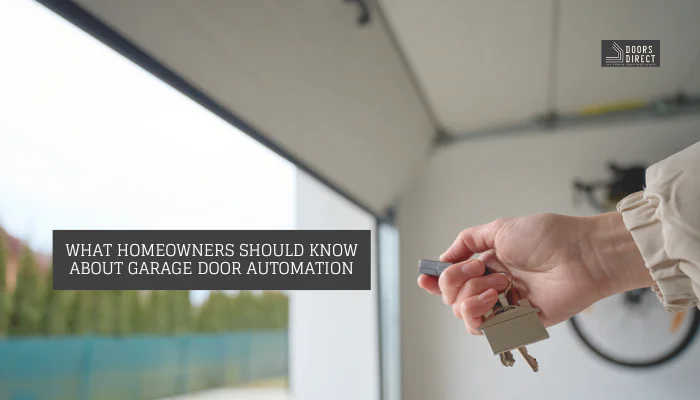
Garage door automation means adding a motor to your door so it opens and closes at the push of a button. So instead of getting out of the car to lift a heavy door by hand, the system does it for you.
Here at Doors Direct, we’ve been installing and servicing automatic garage doors across Brisbane since 2008. And over the years, we’ve helped many homeowners switch from manual garage doors to automatic systems.
In this article, we’ll walk you through how garage door automation works, how to pick the right setup, and the security benefits you can expect.
Garage Door Automation Options: Choosing the Right Setup for Your Home
The right automation setup depends on your door type, motor choice, and how you want to control access. Here are all the things to keep in mind before you decide.
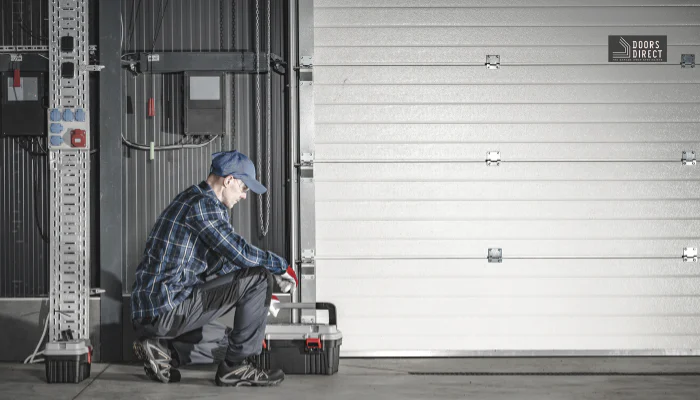
Understanding Different Garage Door Types
Roller doors and sectional (or panel lift) doors are the two most popular types for automation in Australia.
Here, roller doors coil up into a compact drum above the opening, so they’re great for garages with limited ceiling space. On the other hand, sectional doors slide up along tracks in panels, and they tend to offer better insulation and a wider range of design options.
The good news is that you can add a motor to most manual garage doors if they’re still in good working condition. However, if your current door is rusted, bent, or too old to operate smoothly, a full replacement might be the better option before adding a motor.
Selecting the Right Garage Door Motors
Your motor needs to suit the size and weight of your door. A heavy double sectional door, for example, requires a stronger motor than a single roller door. While most residential openers run between ½ and 1 horsepower, your installer will recommend the right fit based on your door’s specs.
How often you use the door also affects your choice. For instance, a household that opens and closes the garage 6 to 8 times a day needs a motor rated for higher duty cycles than one used only twice daily.
Garage Door Remotes vs. Smart Control Systems
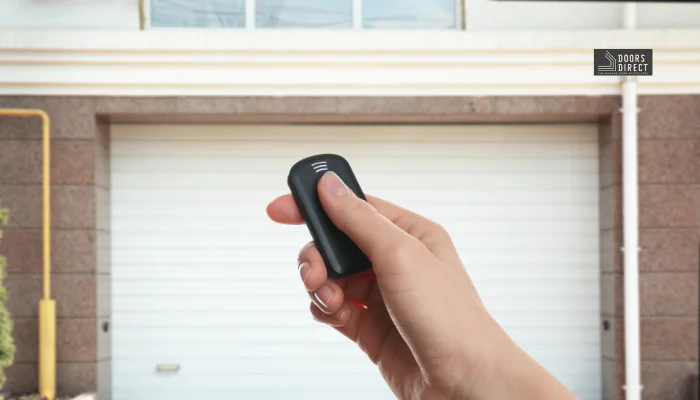
Standard garage door remotes are simple and reliable for everyday use. You press a button, and the door opens instantly. Some systems also come with two handheld remotes and a wall-mounted control panel, which covers the basics for most families.
But smart control systems take things further by giving you remote access from your phone. Merlin’s myQ app, for instance, lets you open, close, and monitor your garage from anywhere with an internet connection.
The myQ app works with all Merlin openers made from 2009 onwards, and it’s compatible with both roller and sectional doors (not tilt doors, though). You can also set scheduled closing times and get real-time alerts if someone leaves the door open.
Matching Automation to Your Lifestyle
Different households use their garage doors in different ways. This is how automation fits a few common situations:
- Busy Families: The morning school run is hectic enough without stopping to lift a garage door. A motorised system speeds things up, and built-in safety sensors will stop the door if a child or toy gets in the way.
- Pet Owners: Pets can be quick and unpredictable, especially around driveways and garage entrances. Because of that, features like auto-reverse and motion detection help reduce the chance of accidents. If something moves under the door while it is closing, the system will react straight away to prevent injury.
- Frequent Travellers: As we mentioned before, remote access through a smartphone app lets you control and check your garage from anywhere. This reduces the stress of wondering whether you left it open while you are away. You can also give temporary access to a neighbour or house sitter without handing over a key.
- Older Homeowners: Lifting a heavy door by hand puts strain on your back and shoulders. Automation takes that physical effort out of the equation entirely.
- Investment Properties: An automatic garage door adds extra convenience that many tenants look for in a rental home. This can make the property more appealing in a competitive market where small features can strongly influence a renter’s choice.
At the end of the day, your automation choice should match how you live day to day and what you need from your home long term.
Cost vs. Value Analysis
Did you know that retrofitting (aka adding a motor to an existing door) a motor to your existing door costs less than a full replacement?
In Australia, a motor installation on a working door typically runs between $400 and $800, depending on the brand and door type. A full door and motor package, on the other hand, can range from $1,200 to $4,500 for a single door and $2,400 to $6,800 for a double.
Whatever you choose, over time, you’ll save time and avoid the physical effort of lifting and handling the door every day. An automated system also lifts your home’s resale value, so the upgrade tends to pay for itself over the years.
Garage Door Opener Installation and Security Considerations
A proper garage door opener installation includes security setup, safety testing, and making sure the system is ready for daily use. Let’s look at what you should know about them.
What Happens During Garage Door Opener Installation?
A professional installation follows a clear process from start to finish. Below is a quick look at each stage:
- Initial Assessment: Before installing anything, your installer will first check the door’s condition, available ceiling space, and power supply. Note that a 240V outlet needs to sit within 1.5 metres of where the motor will go. So make sure a nearby power point is already installed or arranged before installation day.
- Motor Selection: Every door type needs a different opener. This means your installer should recommend a motor based on how your door moves, how much it weighs, and how often you’ll use it each day.
- Installation Process: Once the motor is sorted, the unit gets mounted to the ceiling. Then it gets connected to a rail system and linked to the door. Most jobs will wrap all this up in about half a day.
- Safety Testing: With everything in place, the installer runs several open-close cycles. This step confirms that the auto-reverse and obstruction detection beams activate properly when needed.
- User Setup and Training: The last part is all about you. You’ll get a walkthrough on the remotes, the wall control panel, and the manual release cord. If your system supports the myQ app, your installer can help get that running too.
Now, before the installer leaves, they should walk you through the full system. Don’t hold back on questions at this point, since it’s the best time to sort out anything you’re unsure about.
Security Verification for Modern Garage Doors
Garage break-ins are still one of the most common home security issues in Australia. It’s a big part of why modern automatic garage doors now use security verification before accepting any command from a remote or app.
Rolling code technology provides the main layer of security here. Each time you press your remote, the system will generate a new encrypted code and immediately discard the old one. This prevents anyone from copying or reusing the signal to access your garage.
Older fixed-code systems didn’t work this way, which made them much easier to copy with basic signal-grabbing devices.
Should You Upgrade to Garage Door Automation?
Now, a few common myths might be holding you back. Some people think automatic garage doors are only for high-tech homes, but even a basic motor and remote setup does the job well.
Others worry about cost, which is understandable. However, as you know by now, a simple motor retrofit can start from around $400, which is one of the most affordable ways to upgrade.
And if you’ve heard your existing door can’t be automated, that’s usually not true either. Installers can fit a motor to most well-maintained roller and sectional doors without any issues.
Ready to make the switch? Give us a call at Doors Direct on 07 3161 5963.
Frequently Asked Questions on Garage Door Reliability
Here’s what homeowners usually want to know before getting started.
What happens during a power outage?
Every automated garage door has a manual release cord, usually a red handle hanging from the opener rail. Pulling it disconnects the door from the motor so you can lift it by hand.
Some openers also support a battery backup that allows up to 20 cycles without mains power, which is a handy option if your area gets frequent blackouts.
Can you still open the door manually?
Yes, and not just during blackouts either. The manual release works any time, whether the motor faults or you’re dealing with an emergency.
What if the Wi-Fi drops out?
Your remotes and wall-mounted controls still work fine without the internet. Wi-Fi is only needed for app-based remote access, so a connection drop won’t lock you out of your garage.
What if a remote is lost or stolen?
You can deprogram the missing remote from the opener’s control panel so it stops working. Then just pair a replacement in its place. Most garage systems let you do this in under a minute, so there’s no need to replace the whole system.
About the Author